
One system for managing digital assets globally.
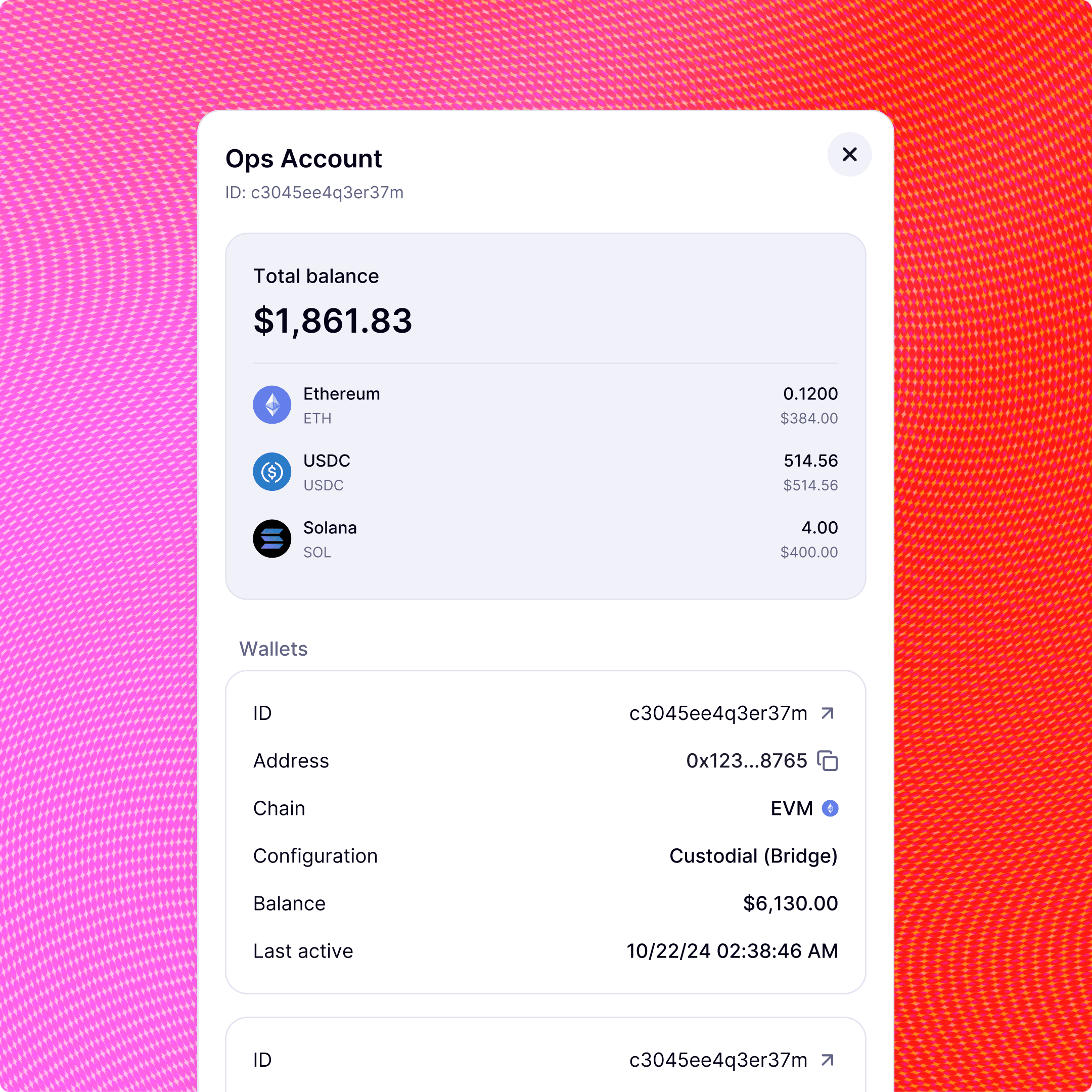










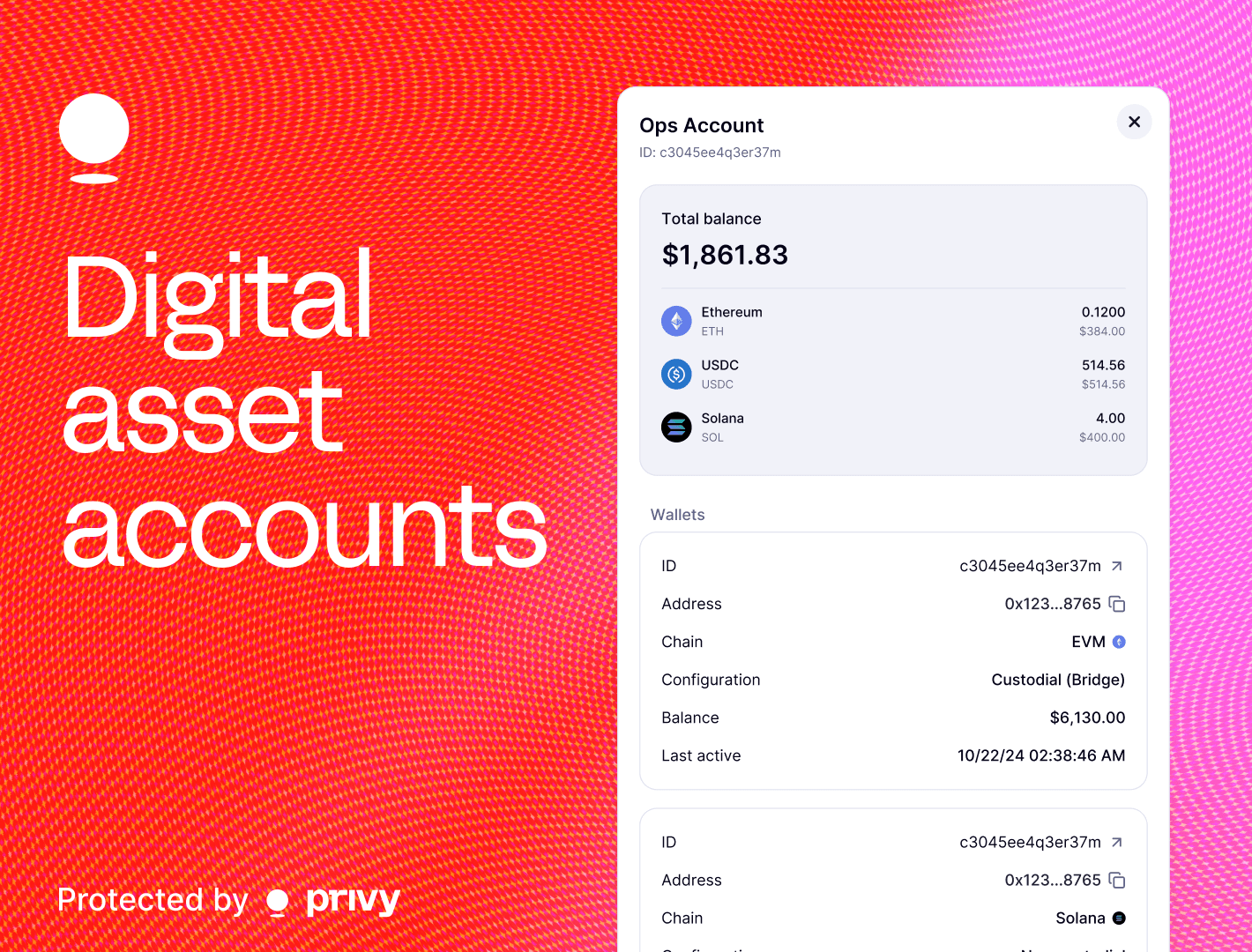
Unify balances across chains
View assets across chains, wallets, and custody models in a single account. No fragmented balances or per-chain wallets.
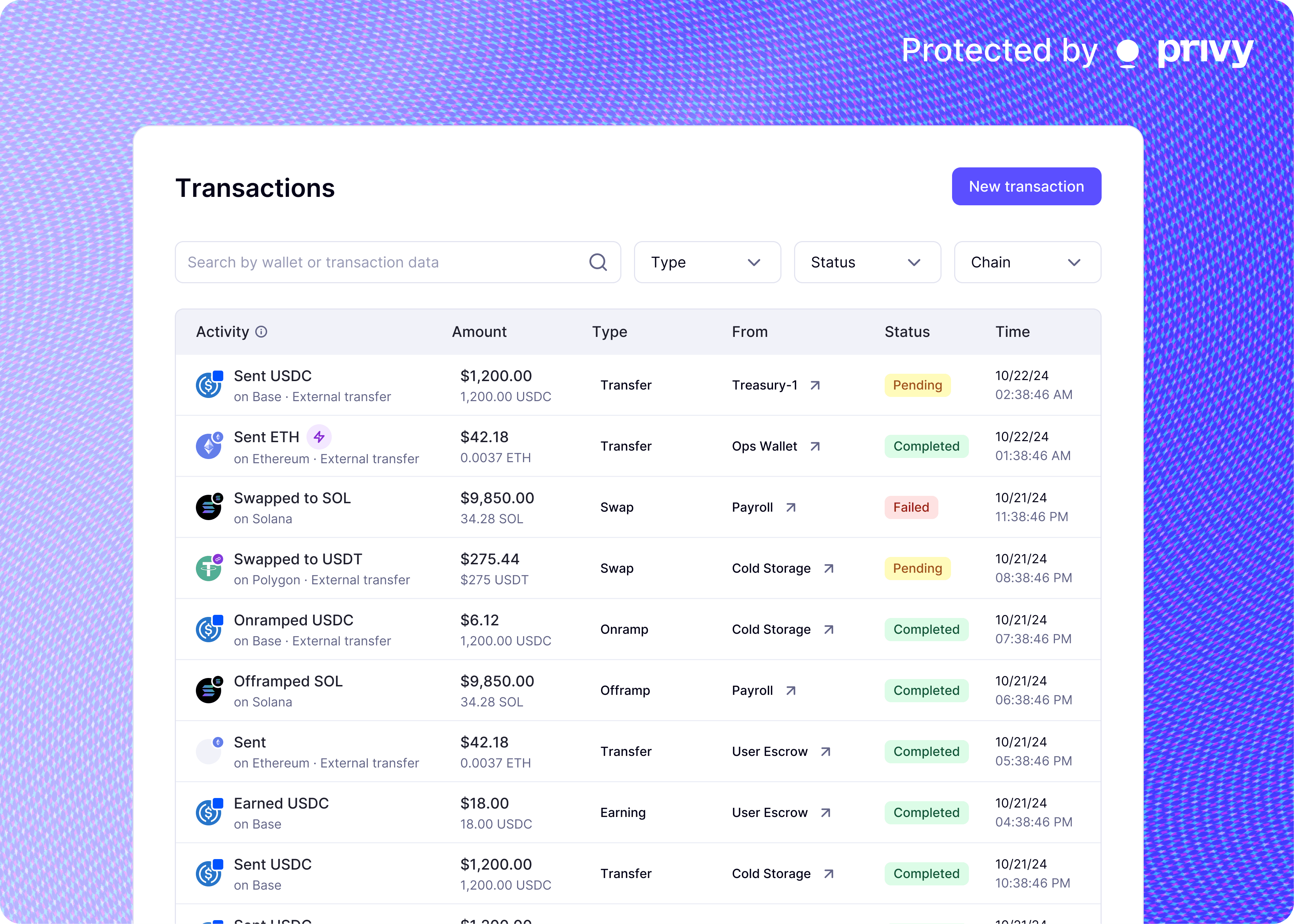
Move money globally
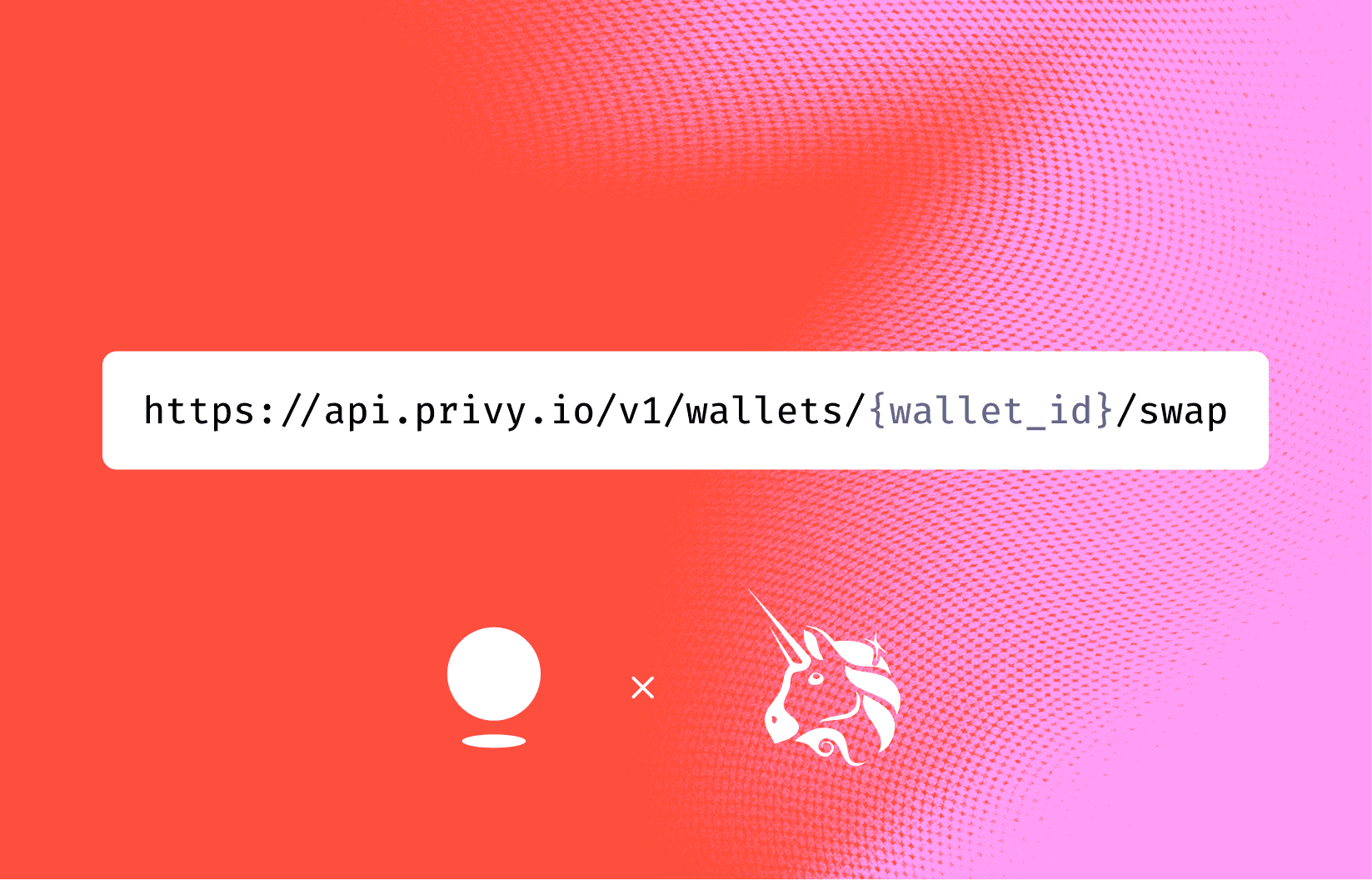
Send and receive stablecoins across chains and currencies with simple APIs. Bridge, swap, onramp, and offramp without protocol-level work.
Put balances to work
Access trading and DeFi yield directly from your account. Deploy into protocols like Morpho and Aave without separate integrations.
Control how funds move
Combine custodial and self-custodial setups in one account. Enforce policies and approvals by user or region.
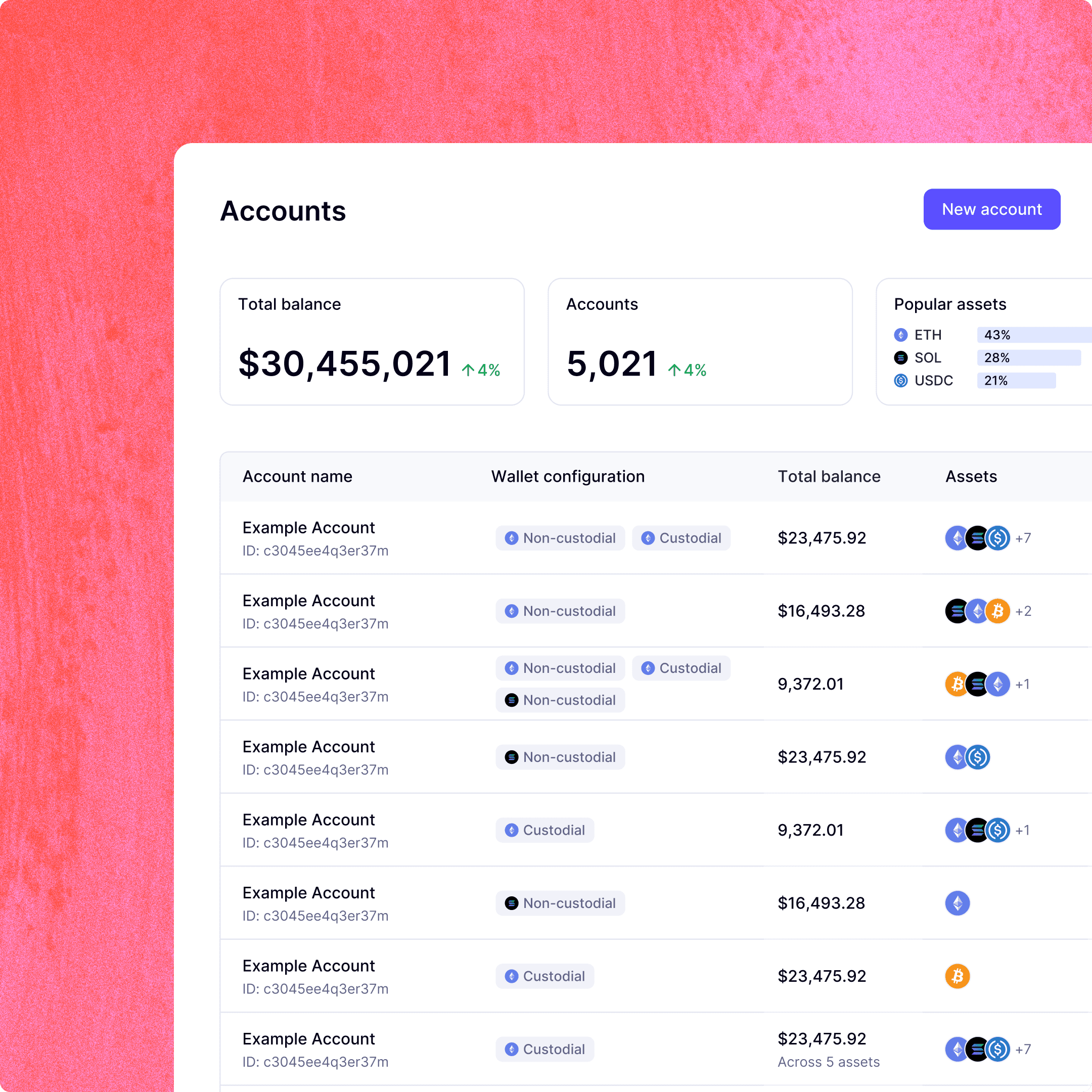
Run global financial flows from a single system.
Accounts and counting
Processed monthly
Signature latency
99.99%
Uptime SLA


Multi-chain by default, single integration
Shift to direct wallet-level API access anytime

What is a digital asset account?
A digital asset account is a programmable account layer that unifies wallets, balances, and transactions across multiple blockchains into a single interface. Instead of managing separate wallet infrastructure per chain, developers interact with one account that aggregates assets, supports transfers, yield allocation, and policy controls — regardless of the underlying chain or custody model.
How does multi-chain balance management work without managing each blockchain separately?
Digital asset accounts abstract chain-level complexity by routing operations through a unified API. When you check a balance or initiate a transfer, the account layer handles chain selection, gas optimization, and asset bridging under the hood. You write one integration; the account resolves the correct wallet, signs the transaction, and settles across chains automatically.
What is the difference between custodial and self-custodial digital asset accounts?
In a custodial setup, Privy via Bridge holds and manages keys on behalf of your users — ideal for regulated environments or users who do not want key management responsibility. In a self-custodial setup, users retain control of their private keys through embedded wallets secured by MPC and TEEs. Digital asset accounts support both models simultaneously — you can assign custody per user, per region, or per asset flow without re-architecting.
How can fintechs earn yield on stablecoin balances programmatically?
Digital asset accounts include first-class APIs for allocating idle balances into DeFi yield protocols like Morpho and Aave. You call a single endpoint to deposit, and the account handles contract interactions, chain routing, and position tracking. Yield accrues to the account balance directly — no separate DeFi integration or smart contract management required on your end.
Do I need a crypto engineering team to integrate stablecoin payments and payouts?
No. Digital asset accounts expose asset-level operations — send, receive, swap, bridge — as simple API calls. You do not interact with contract addresses, signing logic, nonces, or gas. A backend engineer familiar with REST APIs can integrate stablecoin transfers in days. For teams that want lower-level control, raw wallet access is available underneath the account abstraction.
How do digital asset accounts handle compliance and transaction controls?
Accounts support programmable policies enforced at the infrastructure level: approval workflows, signer quorums, spending limits, allowlists, and transaction velocity controls. These apply consistently across all assets and chains tied to the account. Combined with flexible custody, teams can adapt to jurisdiction-specific requirements without splitting their architecture.
Can I issue cards that spend directly from stablecoin balances?
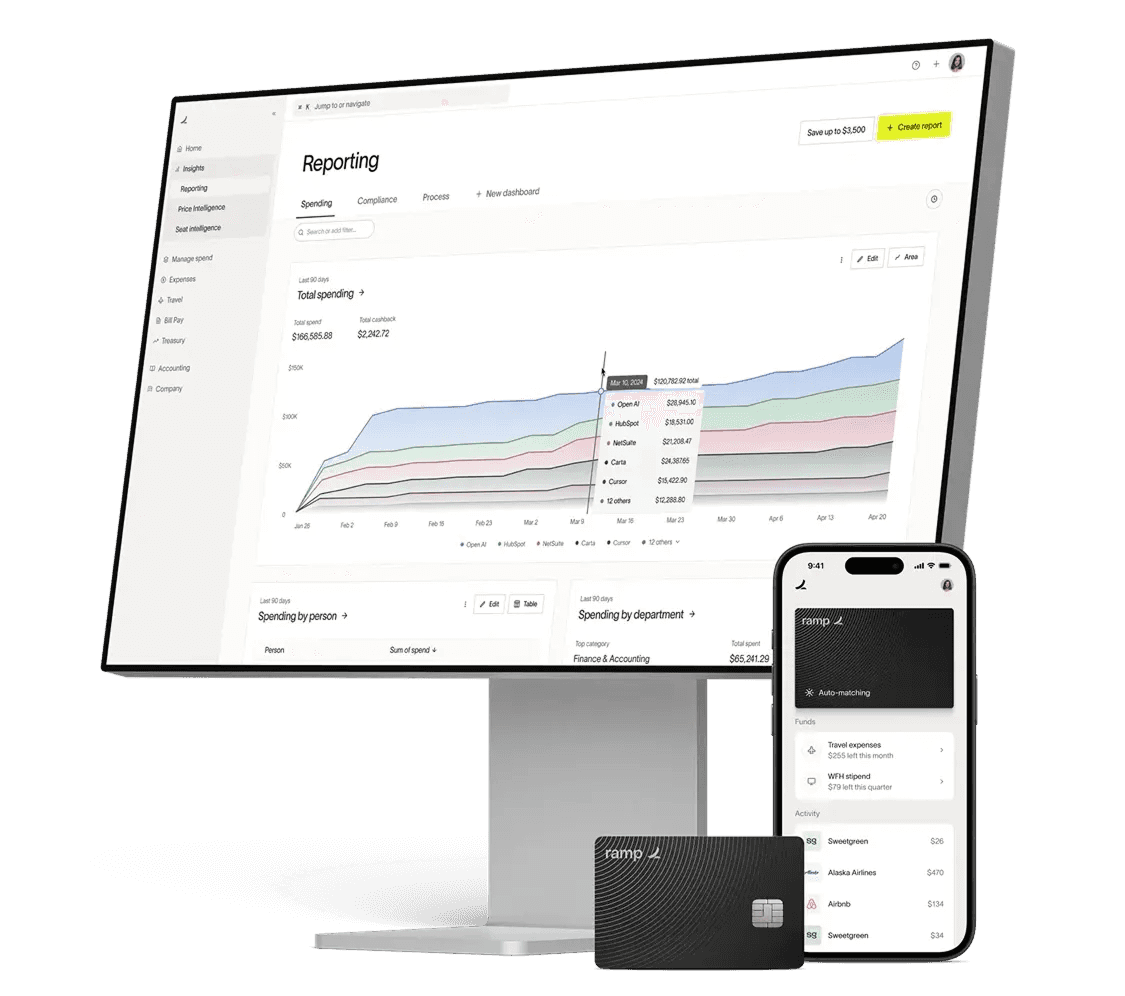
Yes. Digital asset accounts integrate with stablecoin-backed card issuance, allowing end users to spend from their account balance anywhere Visa is accepted. The account handles the conversion from stablecoin to fiat at the point of sale. This is available through Privy’s partnership with Bridge and Stripe Issuing, with support in 30+ countries at launch and 100+ by end of 2026.
What is a digital asset account?
A digital asset account is a programmable account layer that unifies wallets, balances, and transactions across multiple blockchains into a single interface. Instead of managing separate wallet infrastructure per chain, developers interact with one account that aggregates assets, supports transfers, yield allocation, and policy controls — regardless of the underlying chain or custody model.
How does multi-chain balance management work without managing each blockchain separately?
Digital asset accounts abstract chain-level complexity by routing operations through a unified API. When you check a balance or initiate a transfer, the account layer handles chain selection, gas optimization, and asset bridging under the hood. You write one integration; the account resolves the correct wallet, signs the transaction, and settles across chains automatically.
What is the difference between custodial and self-custodial digital asset accounts?
In a custodial setup, Privy via Bridge holds and manages keys on behalf of your users — ideal for regulated environments or users who do not want key management responsibility. In a self-custodial setup, users retain control of their private keys through embedded wallets secured by MPC and TEEs. Digital asset accounts support both models simultaneously — you can assign custody per user, per region, or per asset flow without re-architecting.
How can fintechs earn yield on stablecoin balances programmatically?
Digital asset accounts include first-class APIs for allocating idle balances into DeFi yield protocols like Morpho and Aave. You call a single endpoint to deposit, and the account handles contract interactions, chain routing, and position tracking. Yield accrues to the account balance directly — no separate DeFi integration or smart contract management required on your end.
Do I need a crypto engineering team to integrate stablecoin payments and payouts?
No. Digital asset accounts expose asset-level operations — send, receive, swap, bridge — as simple API calls. You do not interact with contract addresses, signing logic, nonces, or gas. A backend engineer familiar with REST APIs can integrate stablecoin transfers in days. For teams that want lower-level control, raw wallet access is available underneath the account abstraction.
How do digital asset accounts handle compliance and transaction controls?
Accounts support programmable policies enforced at the infrastructure level: approval workflows, signer quorums, spending limits, allowlists, and transaction velocity controls. These apply consistently across all assets and chains tied to the account. Combined with flexible custody, teams can adapt to jurisdiction-specific requirements without splitting their architecture.
Can I issue cards that spend directly from stablecoin balances?
Yes. Digital asset accounts integrate with stablecoin-backed card issuance, allowing end users to spend from their account balance anywhere Visa is accepted. The account handles the conversion from stablecoin to fiat at the point of sale. This is available through Privy’s partnership with Bridge and Stripe Issuing, with support in 30+ countries at launch and 100+ by end of 2026.