Inside the stack: How Deel is turning payroll into a financial account
How Deel built a dollar-backed balance for contractors to hold, earn, and spend across 80+ countries

Debbie Soon
|Sep 15, 2026

Inside the Stack is a content series by Privy that breaks down how companies are using onchain infrastructure alongside traditional financial rails to build new financial products and experiences.
⎯⎯⎯⎯⎯⎯⎯⎯⎯⎯⎯⎯⎯⎯⎯⎯⎯⎯⎯⎯⎯⎯⎯⎯⎯⎯⎯⎯⎯⎯⎯⎯⎯⎯⎯⎯⎯⎯⎯⎯⎯⎯⎯⎯⎯⎯⎯⎯⎯
Few payments matter as much as a paycheck. It’s how people pay rent, build savings, support their families, and plan for what comes next. For global workers, though, getting paid in dollars and being able to keep and use those dollars are not always the same thing.
Deel already helps more than 40,000 businesses hire and pay workers across 150 countries. But in markets with volatile local currencies or limited access to dollar accounts, contractors can face another problem once their paycheck arrives: where to hold it, how to preserve its value, and what to do with it next.
In Argentina, for example, 84.6% of contractors surveyed by Deel in 2025 said they would choose to be paid in US dollars over pesos. Yet accessing and holding dollars locally can come with restrictions, documentation requirements, and minimum balances.
Deel’s stablecoin wallet changes what can happen after that paycheck arrives. Rather than using stablecoins simply as a rail for moving money, Deel lets contractors keep their earnings in a dollar-backed balance inside the same platform where they get paid.
What began in Argentina has since expanded to more than 80 countries across Latin America, Africa, the Middle East, and APAC. Behind that balance is an architecture spanning traditional payments, stablecoin issuance, embedded wallets, and a blockchain built for payments.
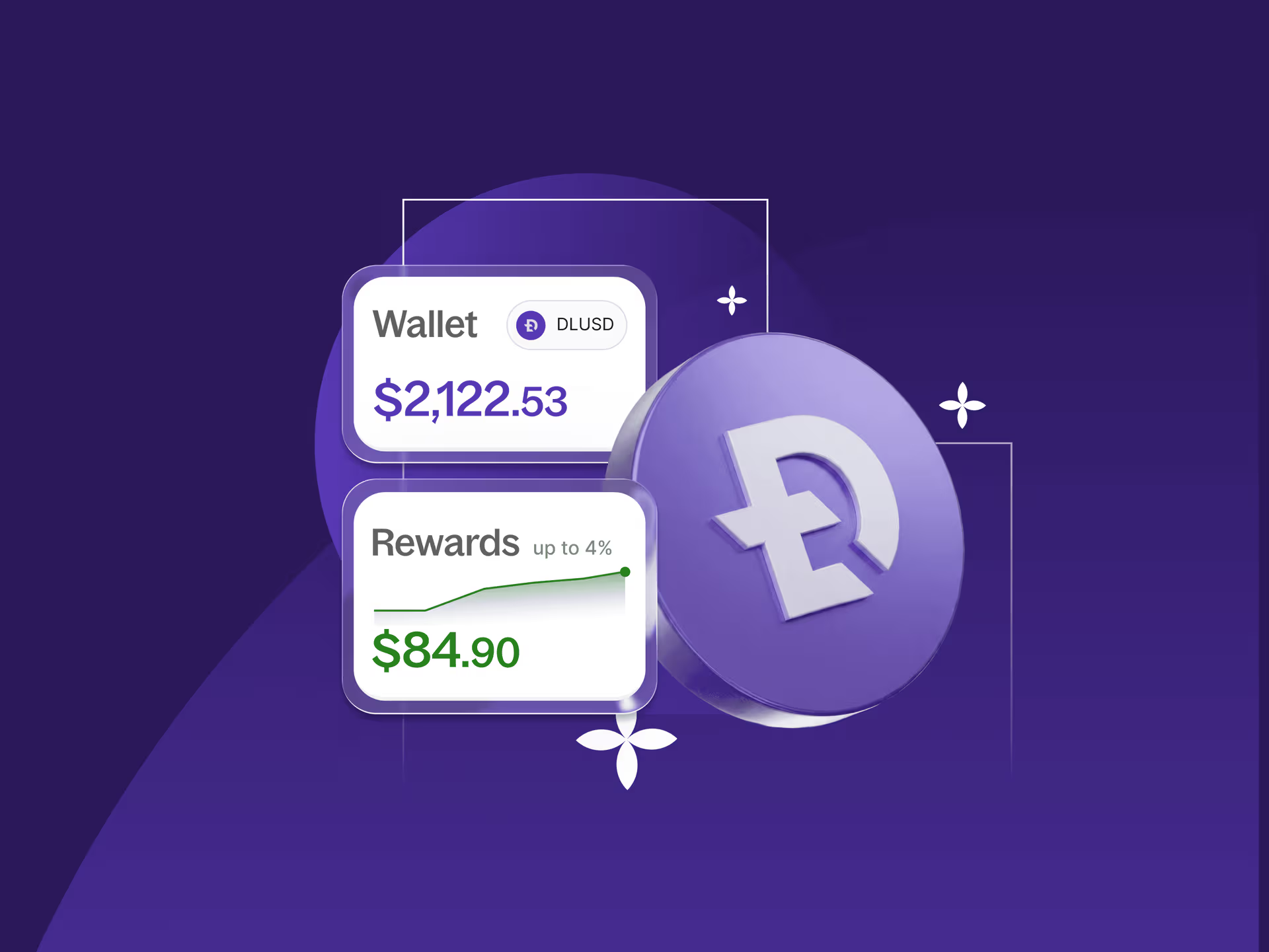
Turning a paycheck into a dollar balance
When an employer pays Deel, Stripe can handle the collection of funds through traditional payment rails. Bridge then converts US dollars into DLUSD, Deel’s USD-denominated digital balance, using its Open Issuance infrastructure. DLUSD is issued on Tempo and designed to track the value of the US dollar 1:1.
Issuing its own stablecoin gives Deel a dollar-denominated asset designed around its product, rather than requiring the product experience to conform to an existing stablecoin. Open Issuance provides the infrastructure for businesses to customize elements like chain support and reserve strategy, while Bridge handles the underlying issuance, reserves, and liquidity.
For the contractor, DLUSD lands in the same Deel product they already use to receive and manage their pay. Underneath, it is held in an embedded non-custodial wallet provisioned by Privy.
That separation lets Deel design the product around dollars rather than crypto. Contractors don't need to acquire a stablecoin themselves or move funds through an exchange. They see their earnings inside Deel, while issuance, wallets, and blockchain settlement happen behind the scenes.
A wallet that feels like an account
Privy provisions an embedded wallet automatically for eligible Deel contractors who have completed identity verification. That wallet holds the DLUSD behind each contractor’s Deel balance and handles onchain transactions on their behalf.
Deel runs these wallets on Tempo, whose native account abstraction supports passkey authentication, transaction batching, and fee sponsorship. Contractors can authenticate with Face ID or device biometrics, while Deel covers transaction fees on their behalf, removing the need to manage seed phrases or hold a separate gas token.
At payroll scale, the economics of maintaining those wallets matter too. Tempo transactions have a fixed $0.001 fee paid in stablecoins, with no account rent. That gives Deel predictable costs even across large numbers of wallets with relatively small individual balances.
Privacy matters differently when an onchain balance represents someone’s paycheck. Deel plans to use Tempo’s Privacy Zones to keep contractor balances and payment histories from being publicly visible, while preserving auditable access for Deel.
Putting a paycheck to work
Contractors can opt into Earn with a single tap, putting eligible DLUSD balances into Morpho vaults deployed on Tempo. There is no minimum holding period or lock-up, and contractors can withdraw their balance when they choose.
Early usage suggests contractors aren't treating the wallet simply as another payout rail. 74% of payout recipients deposited into Earn, 60% of eligible users are actively earning, and 30-day Earn retention has reached 85%. Across cohorts, Earn balances grew 72% after 30 days, driven largely by additional deposits.
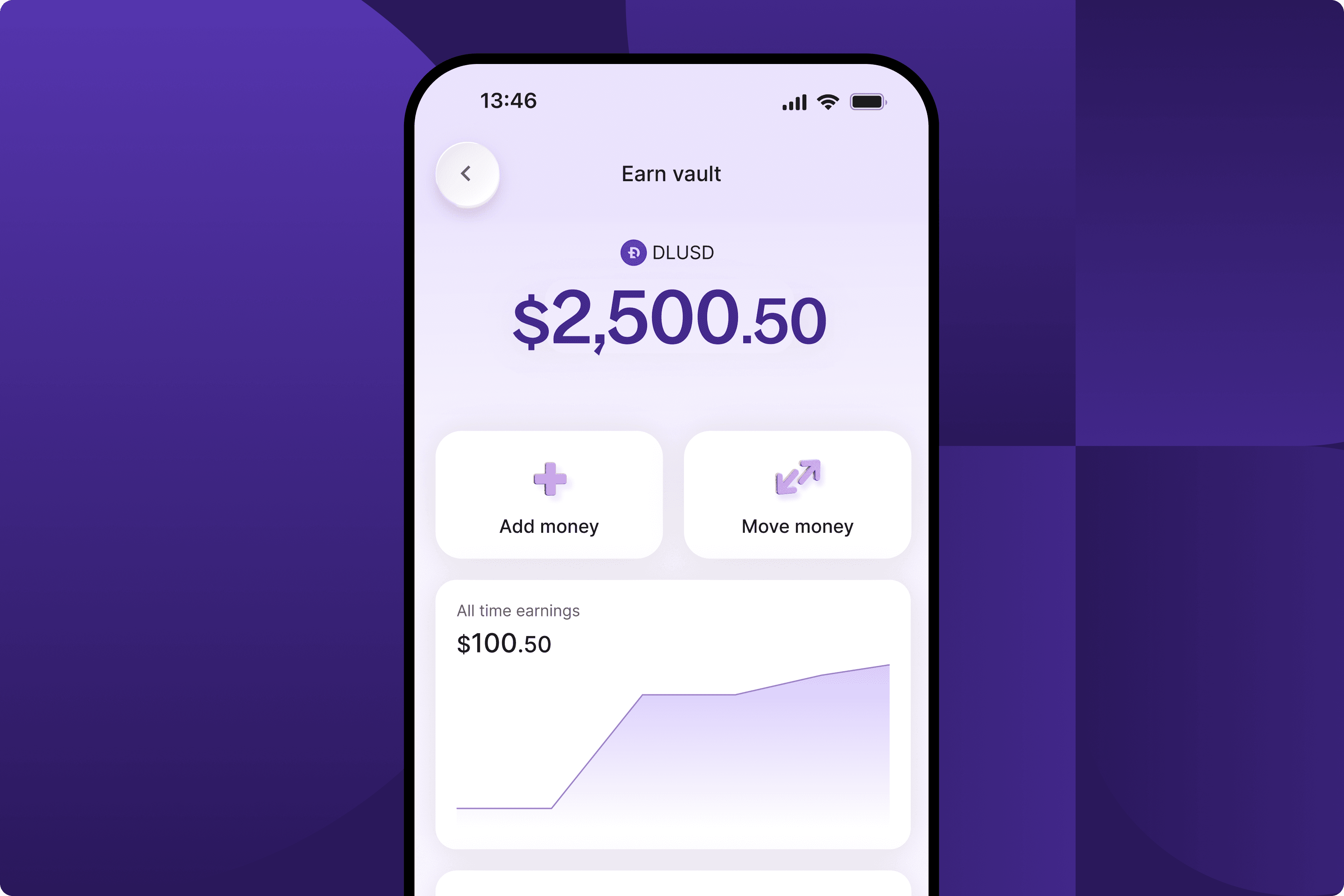
Contractors can also move funds beyond Deel, withdrawing onchain to an external wallet as USDC or USDT. And with the Deel Card planned for later this year, contractors will also be able to spend from their DLUSD balance directly.
Stablecoins are often discussed as a new rail for moving money globally. Deel shows what changes when they become infrastructure for the product itself. The paycheck doesn't just arrive differently; the product around it can do more.
Stripe’s stablecoin stack provides several of the building blocks behind that experience, from payment collection with Stripe and custom stablecoin issuance with Bridge to programmable wallets with Privy, with onchain settlement happening on Tempo.
If you're building a global financial product that spans traditional and onchain rails, get in touch to explore what you can build on the Stripe stablecoin stack.

