Building multi-user financial workflows with intents
Collect approvals from multiple people over time, and execute wallet actions once the required threshold is met

Ankush Swarnakar
|Aug 21, 2026

Ready to build? Explore intents in our docs and start building asynchronous approval workflows with Privy.
⎯⎯⎯⎯⎯⎯⎯⎯⎯⎯⎯⎯⎯⎯⎯⎯⎯⎯⎯⎯⎯⎯⎯⎯⎯⎯⎯⎯⎯⎯⎯⎯⎯⎯⎯⎯⎯⎯⎯⎯⎯⎯⎯⎯⎯⎯⎯⎯⎯
Moving money on behalf of a business often requires more than one approval, and these approvals don’t always happen at the same time. One person might initiate a treasury transfer in the morning, while another reviews and approves it hours later.
Privy has long supported multi-party authorization through key quorums. Intents make these workflows more flexible by allowing each party to authorize an action on their own time.
What intents are, and how they work
Intents are Privy’s mechanism for asynchronous signing. Instead of requiring an action and all of its authorization signatures to be submitted together, intents break the process into three steps.
Propose: Your application creates an intent describing an action, such as transferring funds or updating a wallet with additional signers or policies.
Authorize: The wallet’s owners or signers add their signatures independently over time.
Execute: Once the signatures satisfy the wallet’s authorization threshold, Privy automatically executes the action.
By separating proposal from execution, businesses can approve financial actions on their own time, while Privy handles the complexity of collecting signatures and executing once the requirements are met.
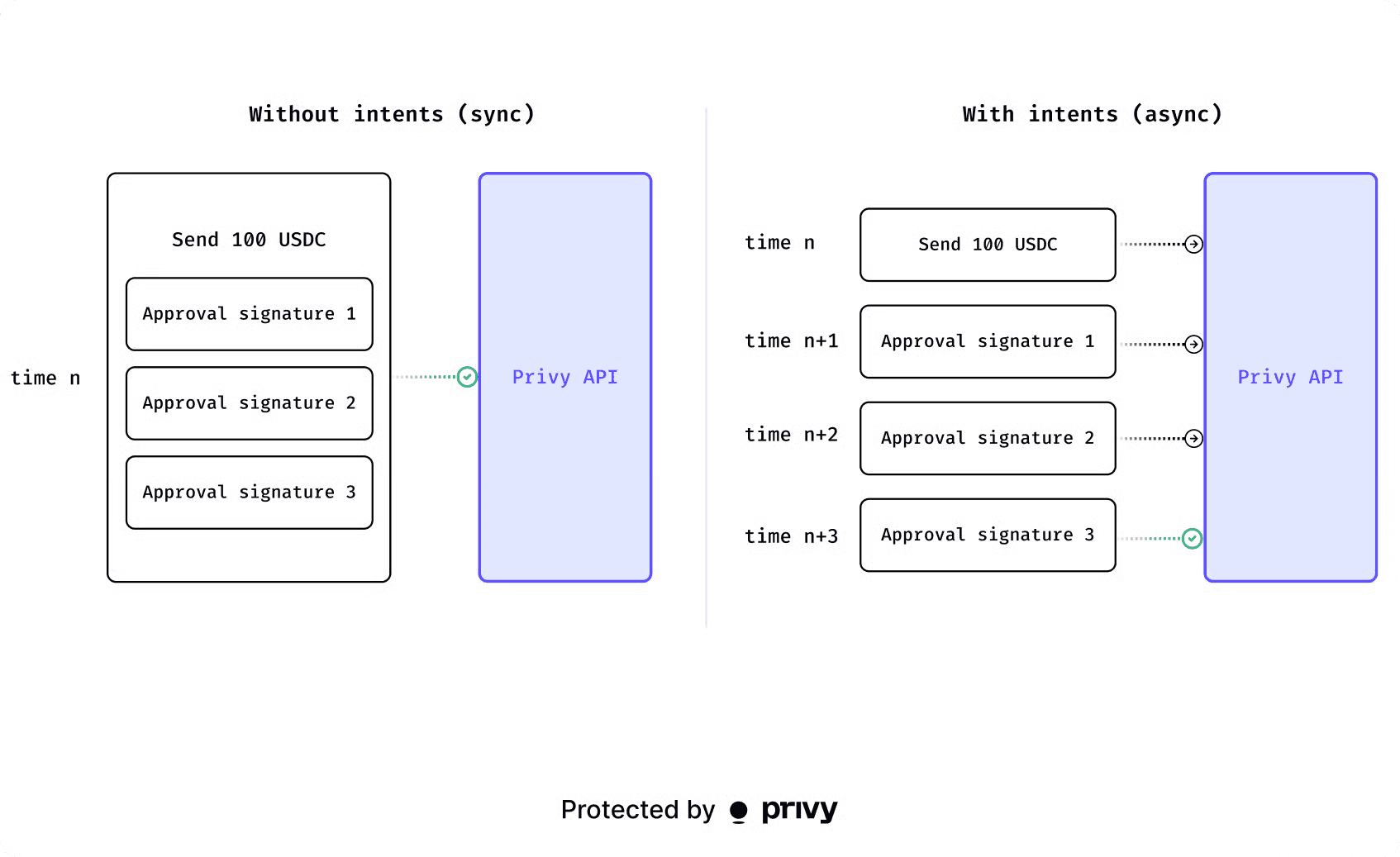
Approve now, execute when ready
Intents can support common financial authorization patterns like maker-checker, where one person initiates an action and one or more authorized parties independently review and approve it.
A finance manager proposes a treasury transfer.
An authorized team member approves it that morning.
A second approver reviews and approves it later that afternoon.
Once the required approval threshold is met, Privy executes the transfer.
No one needs to coordinate schedules or be online at the same time. Developers can build the approval experience directly into their product, while Privy handles collecting the authorization and executing the action when it’s ready.
Approvals aren't the only thing that can happen in between. For example, an exchange could let a user initiate a purchase before their wallet is funded. The application can propose the transaction, fund or onramp into the wallet while the intent is pending, then authorize execution once the funds arrive.
The same window can be used for compliance or risk checks, user confirmation, or other steps that need to happen before a transaction executes. This gives developers a flexible way to coordinate the different people, systems, and prerequisites involved in a financial workflow without requiring everything to happen at once.
Built for how businesses operate
Together, Organization Wallets and intents make it easier to build financial products around how businesses actually operate: approvals can happen over time, Privy manages the authorization process, and other steps like funding or compliance can happen before execution.
Whether you're building treasury management, business banking, spend management, B2B payments, or another multi-user financial product, you can build these workflows directly into your own product with Privy.
Start building with intents now.


